Wood fence
Wood fence installation.
Picket, board-on-board, shadowbox, split-rail, and three-board pasture fence. Pressure-treated pine or cedar, cut on site, posts set in concrete, gates hung so they actually swing right.
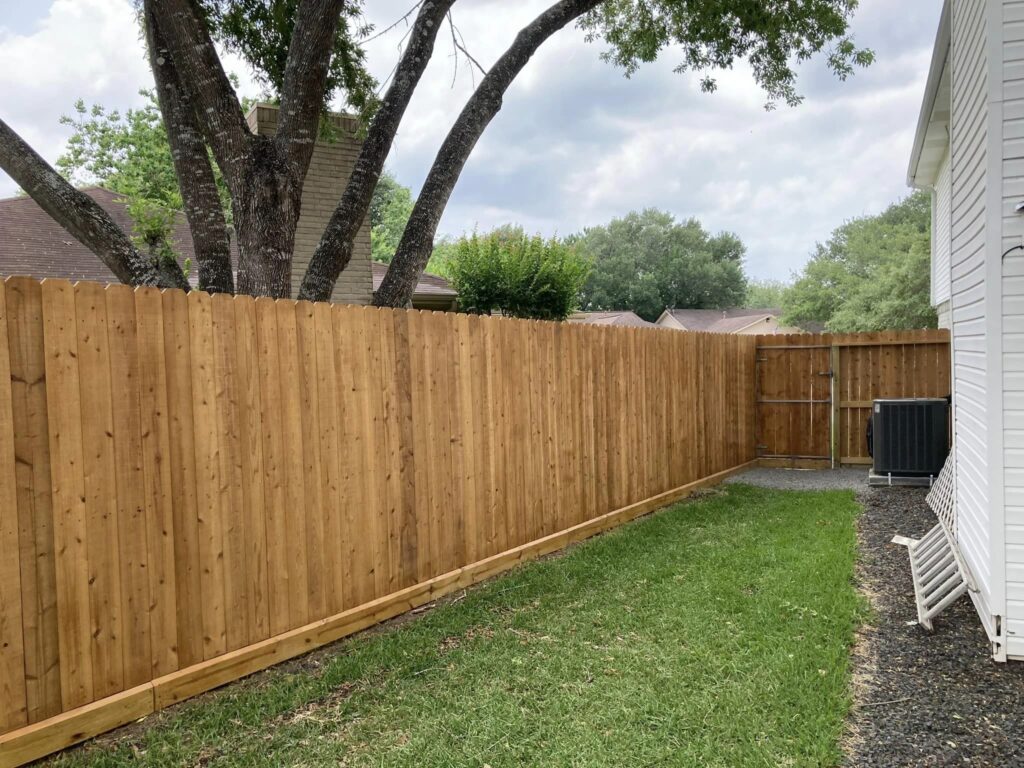
How we build wood fence
Custom wood fence built to stay plumb.
Around here we see a lot of wood fences leaning within a couple years — almost always because the posts weren't set right. We dig every hole to depth, pour concrete around every post, and let it cure before we start hanging pickets or panels. That extra day is the difference between a fence that stays plumb for fifteen years and a fence you're straightening every spring.
We use pressure-treated southern yellow pine as our standard, and cedar when you want the color and the smell without the pressure-treated look. Both hold up in the WNC climate as long as the posts are set right and the bottom of the pickets isn't sitting in dirt. On slopes we rack the panels to follow grade instead of stepping them, so you don't end up with triangular gaps at the bottom that dogs slip through.
Every gate we hang gets heavy-duty hinges rated well past the weight of the gate, a drop rod on any double gate, and a latch positioned so it actually catches without you having to lift the gate. Little details, but they're the difference between a gate that works for a decade and one that sags in a summer.
Styles
Wood fencing styles we install.
Classic picket is the front-yard workhorse — 3 or 4 feet tall, spaced pickets, dog-ear or French Gothic tops. It defines the yard without closing it in, and it's what most people picture when they think "wood fence."
When you actually want privacy we build board-on-board or shadowbox. Board-on-board overlaps the pickets so there's no line of sight even after the wood shrinks a season or two. Shadowbox alternates pickets on both sides of the rail, which looks the same from both yards — the neighborly option if you're splitting the cost.
For pasture and acreage we run split-rail, three-board, and four-board. These aren't containment fences on their own, but with hot wire or field mesh added they hold livestock and still look right on a rural property. Split-rail with wire mesh attached is one of our most popular options for people with dogs and open land.
Maintenance
Making a wood fence last.
A wood fence is a real material — it moves, it weathers, and if you leave it completely alone it turns silver-gray in a couple seasons. That's not a defect, that's what wood does. If you want to keep the warm brown color, plan on staining or sealing it every three to five years. If you want it silver, do nothing and it'll get there on its own.
The two things that actually kill a wood fence are ground contact and standing water. We keep pickets a hair above grade so they're not wicking moisture out of the soil, and we crown the concrete at each post so water runs off instead of pooling against the wood. Do that and a pressure-treated fence will outlast most vinyl.
Ready to price out a wood fence build? Send us the details and we'll get a walk-through on the calendar.